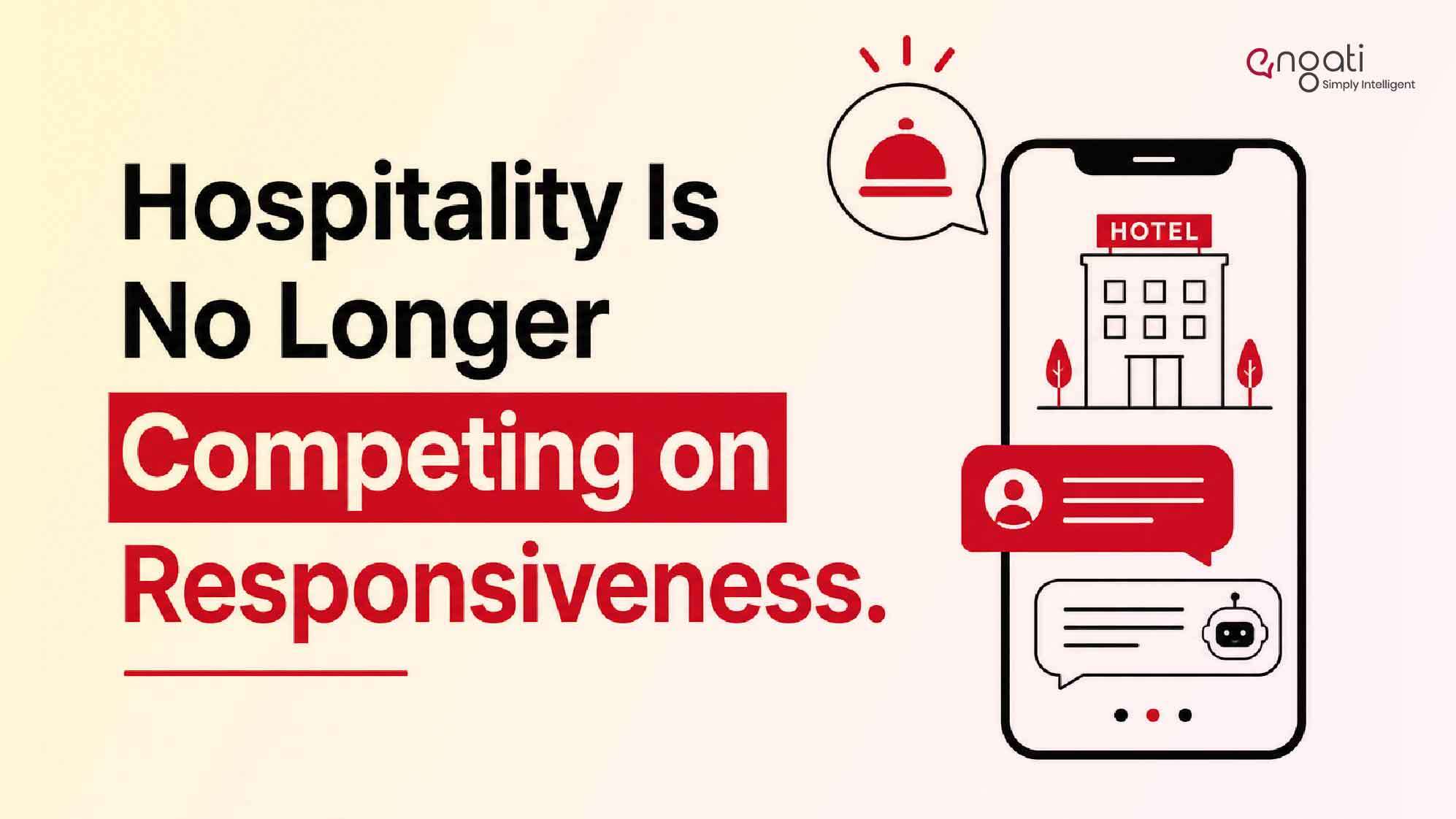
A traveler lands on your hotel website at midnight looking for a weekend stay.
They are interested. They are ready to book. But before making a decision, they have a few questions.
Is early check in available?
Can they arrange an airport pickup?
Does the booking include breakfast?
Are family rooms available?
Can the reservation be modified later if plans change?
Most hospitality businesses still respond to these moments with static booking systems, delayed emails, or overloaded support teams. The customer either waits or leaves.
And that is becoming one of the biggest hidden revenue leaks in hospitality today.
The modern guest journey no longer starts at check in. It starts the moment intent appears. Every unanswered question, delayed response, or disconnected interaction increases the chances of abandonment.
This is exactly why hospitality brands are increasingly shifting toward conversational AI driven engagement. Not simply to automate support, but to make the entire guest experience faster, smoother, and significantly more connected.
For years, hospitality businesses optimized around occupancy rates, pricing strategies, and booking channels. But customer expectations have evolved much faster than operational systems.
Today’s travelers expect instant responses, personalized recommendations, seamless booking modifications, and real time support. They want convenience built directly into the experience.
At the same time, hospitality brands are managing growing inquiry volumes across websites, WhatsApp, calls, booking platforms, social media, and OTAs. The challenge is that these interactions often remain disconnected from each other.
A guest may start exploring rooms on the website, ask questions on WhatsApp, call later for confirmation, and finally send an email to modify the reservation. Most hospitality systems still treat these interactions separately instead of as one continuous guest journey.
That fragmentation creates delays, inconsistent experiences, and eventually lost bookings.
Conversational AI changes that dynamic entirely.
Platforms like Engati are helping hospitality brands move beyond traditional booking workflows and create real time conversational experiences instead.
Instead of forcing guests through rigid booking systems, AI powered engagement allows hotels to guide travelers naturally through discovery, booking, modifications, and support.
A guest looking for a room can instantly check availability, compare room types, ask questions about the property, request amenities, arrange airport transfers, modify reservations, and even complete bookings conversationally.
The experience feels intuitive because the interaction adapts to the guest instead of forcing the guest to adapt to the system.
And in hospitality, convenience directly impacts conversion.
One of the biggest operational blind spots in the industry today is incomplete bookings.
Guests frequently leave booking flows midway, abandon payment pages, exit after checking pricing, or disengage because support responses take too long. Most businesses simply lose these customers entirely.
Conversational AI creates an opportunity to recover these high intent guests proactively.
Using automation powered by Engati, hospitality brands can identify abandoned journeys and re engage travelers through contextual conversations.
Instead of sending a generic follow up email, the interaction can feel far more personalized.
For example:
“We noticed you were exploring ocean view rooms for this weekend. Would you like help completing your reservation?”
That small shift changes engagement quality dramatically.
Because hospitality decisions are emotional and timing driven. If engagement happens while intent is still active, recovery rates improve significantly.
Another major shift happening across hospitality is around flexibility.
Modern travelers expect booking modifications to be simple. But many hospitality businesses still make changes unnecessarily difficult through long wait times, manual coordination, delayed confirmations, and fragmented communication across departments.
This friction impacts customer satisfaction long before the stay even begins.
Conversational AI simplifies this process by allowing guests to modify bookings, request upgrades, extend stays, or reschedule reservations instantly through natural conversations.
Instead of contacting multiple teams, guests can resolve requests in real time through a single conversational experience.
For hospitality businesses, this reduces operational pressure while simultaneously improving guest satisfaction.
What makes this transformation especially important is that conversational engagement now extends far beyond reservations alone.
Hotels and hospitality brands are increasingly using AI driven conversations across the entire guest lifecycle including pre booking inquiries, reservation assistance, booking recovery, check in coordination, concierge support, upselling experiences, in stay engagement, feedback collection, and loyalty communication.
The hospitality industry is gradually shifting away from transactional service models and moving toward continuous guest engagement.
And this shift matters because customer expectations are now being shaped by industries like retail, banking, and ecommerce where instant responsiveness has already become standard.
Travelers now expect the same speed and personalization from hospitality brands as well.
The hotels that stand out in the coming years will not necessarily be the ones with the lowest pricing or the largest properties.
They will be the ones that remove friction most effectively across the guest journey.
That means faster responses, smarter engagement, personalized interactions, and seamless continuity across channels.
With solutions from Engati, hospitality businesses can build scalable conversational ecosystems that improve booking conversions, recover abandoned journeys, simplify guest support, and strengthen long term customer loyalty.
Because in modern hospitality, the experience begins long before the guest arrives.
It begins with the conversation. To know more book a Demo.