Why Choosing the Right Messaging Channel Matters More Than Ever
Customer communication has shifted dramatically from email and phone calls toward real-time messaging. Businesses today rely on messaging channels to send updates, provide support, run marketing campaigns, and drive conversions. But with multiple options available, including RCS, SMS, and WhatsApp, many organisations struggle to determine which channel delivers the best results for their specific goals.
Choosing the wrong channel can lead to poor engagement, high costs, limited personalisation, and missed revenue opportunities. On the other hand, a well-designed channel strategy helps businesses increase response rates, improve customer experience, and create scalable conversational journeys across marketing, sales, and support functions.
This guide compares RCS, SMS, and WhatsApp messaging across capabilities, use cases, and strategic considerations so organisations can build a future-ready communication strategy.
Understanding the Basics: What Are RCS, SMS, and WhatsApp Messaging?
Before comparing channels, it’s important to understand how each one works within the messaging ecosystem.
SMS (Short Message Service) is the most traditional and widely supported messaging channel. It allows businesses to send text messages directly to customers' phones without requiring internet connectivity or app installations. SMS is simple, reliable, and ideal for transactional communication.
RCS (Rich Communication Services) is often described as the next evolution of SMS. It enables rich media messages, branded interactions, interactive buttons, carousels, and conversational experiences directly within the native messaging app on Android devices.
WhatsApp Business Messaging provides app-based conversational messaging with multimedia support, automation, and real-time chat experiences. Businesses can run marketing campaigns, customer service conversations, and AI-driven workflows through WhatsApp conversations.
Each channel offers unique advantages depending on the communication objective, audience behaviour, and level of interactivity required.
RCS vs SMS vs WhatsApp: Key Differences That Impact Strategy
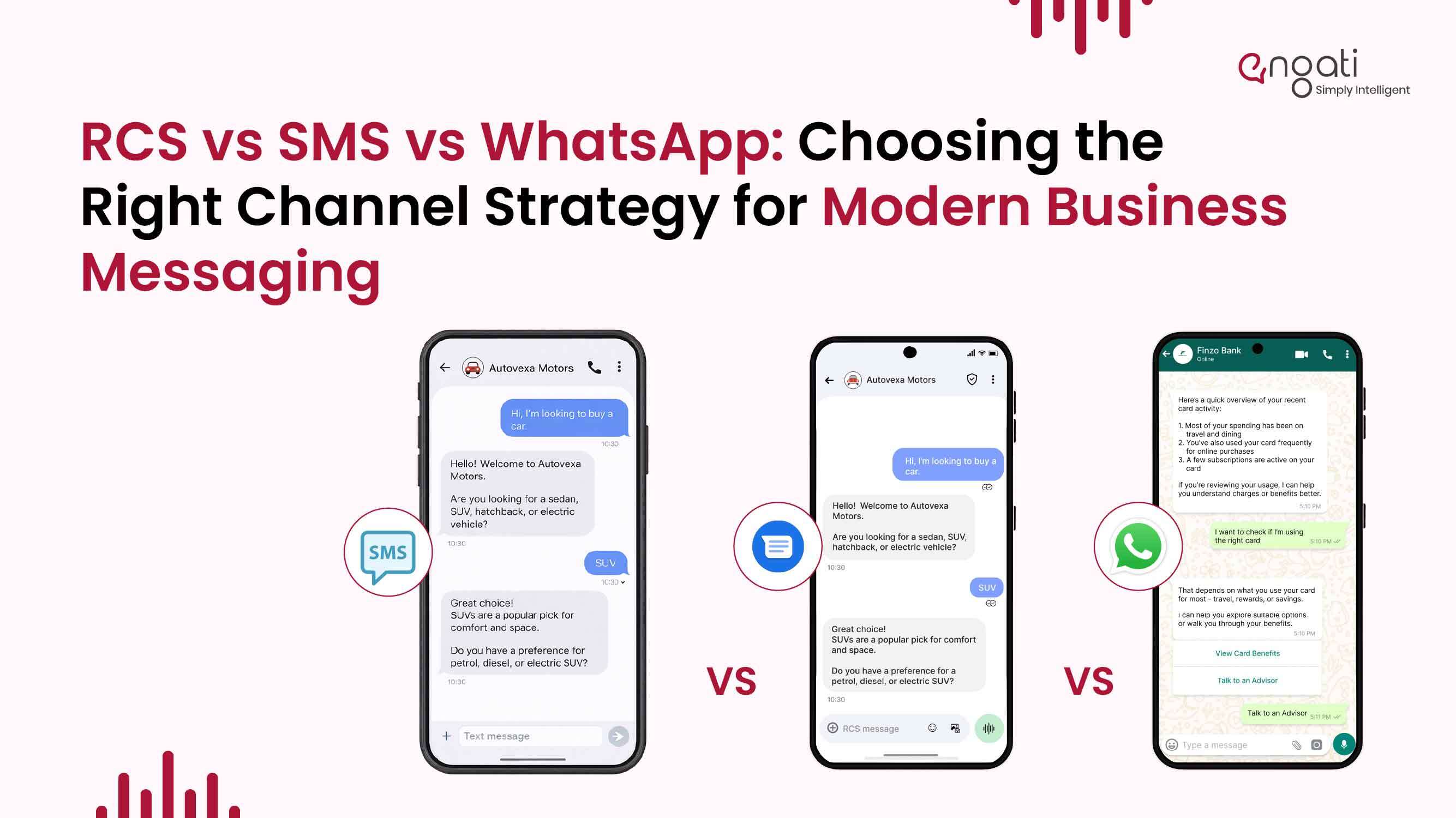
Interactivity and Customer Experience
- SMS supports only basic text messages, making it suitable for alerts, OTPs, and short notifications.
- RCS enables rich visuals, buttons, suggested replies, and branded interactions, creating app-like experiences without requiring downloads.
- WhatsApp offers highly interactive conversations, multimedia messaging, and continuous chat threads that feel like personal communication.
For businesses focused on engagement and interactive journeys, RCS and WhatsApp provide a significantly more immersive experience than SMS.
Reach and Accessibility
- SMS has universal reach across all mobile phones, including feature phones and areas with limited internet connectivity.
- RCS is primarily available on Android devices with supported messaging apps and network compatibility.
- WhatsApp requires users to have the app installed and internet access, but benefits from massive global adoption and high daily usage.
SMS remains the best option for guaranteed reach, while WhatsApp excels in markets with high app adoption and smartphone penetration.
Automation and Conversational Capabilities
- SMS automation is typically limited to notifications and simple keyword responses.
- RCS allows conversational flows with AI agents, enabling structured interactions inside the messaging app.
- WhatsApp supports advanced conversational automation, chatbots, and AI-driven workflows across customer journeys.
Businesses planning to deploy conversational AI or automated engagement strategies often prefer RCS or WhatsApp over SMS.
Branding and Rich Media Support
- SMS has limited branding opportunities beyond sender IDs.
- RCS allows verified business branding, logos, rich media cards, and interactive elements.
- WhatsApp enables branded business profiles, product catalogues, images, videos, and voice messages.
For marketing campaigns and product discovery experiences, RCS and WhatsApp offer far greater creative flexibility.
Cost Considerations and Campaign Goals
- SMS costs are typically predictable and suitable for high-volume transactional messaging.
- RCS pricing depends on region and campaign type, but often aligns with interactive messaging strategies.
- WhatsApp operates on conversation-based pricing models, making it ideal for engagement-focused campaigns rather than simple alerts.
Choosing the right channel often depends on whether the goal is reach, engagement, or conversion.
When to Use SMS in a Modern Messaging Strategy
SMS remains highly effective for:
- One-time passwords (OTPs) and security notifications
- Appointment reminders and transactional alerts
- Emergency communications requiring universal delivery
- Short updates that do not require rich interaction
Its simplicity and reliability make it a foundational messaging layer, especially in regions with varied device capabilities.
When RCS Is the Right Choice for Business Messaging
RCS works best for:
- Conversational customer journeys initiated from search or campaigns
- Interactive onboarding flows or service selection menus
- Promotional campaigns that benefit from rich visuals and quick-reply buttons
- Customer engagement experiences that feel app-like without requiring downloads
RCS is particularly valuable for Android-heavy markets and businesses seeking to modernise SMS experiences with richer capabilities.
When WhatsApp Is Ideal for Conversational Engagement
WhatsApp excels in scenarios where continuous conversations are important:
- Customer support and service interactions
- Lead qualification and sales conversations
- Marketing campaigns that require back-and-forth engagement
- E-commerce inquiries, order tracking, and post-purchase support
- Appointment scheduling and follow-up workflows
Its conversational nature and global adoption make it a powerful platform for building long-term customer relationships.
Building a Multi-Channel Messaging Strategy Instead of Choosing Just One
Rather than viewing RCS, SMS, and WhatsApp as competing channels, many organisations use them together as part of a unified messaging ecosystem:
- SMS ensures guaranteed delivery for critical notifications
- RCS delivers rich interactive campaigns and branded conversations
- WhatsApp supports ongoing conversational engagement and automation
By orchestrating channels based on customer preferences and campaign objectives, businesses can maximise reach while delivering personalised experiences.
Common Mistakes Businesses Make When Selecting Messaging Channels
- Using SMS for complex workflows that require interactivity
- Overlooking RCS opportunities in Android-dominant regions
- Treating WhatsApp only as a support tool instead of a revenue channel
- Ignoring customer channel preferences and behavioural data
- Failing to integrate messaging channels with CRM and analytics platforms
Avoiding these mistakes helps organisations design messaging strategies that balance reach, engagement, and operational efficiency.
The Future of Business Messaging: Unified Conversational Channels
Messaging platforms are evolving toward unified conversational ecosystems where voice, chat, rich media, and AI-driven workflows operate seamlessly across channels. Emerging trends include:
- AI agents managing conversations across SMS, RCS, and WhatsApp simultaneously
- Conversational search journeys that transition directly into messaging interactions
- Rich messaging experiences replacing traditional landing pages
- Data-driven personalisation across every customer touchpoint
Businesses that adopt multi-channel messaging strategies early will be better positioned to meet changing customer expectations and drive long-term engagement.
Final Thoughts: Choosing the Right Messaging Channel Strategy
There is no single “best” messaging channel, only the best strategy based on your audience, objectives, and desired customer experience. SMS provides unmatched reach and reliability, RCS offers rich interactive engagement within native messaging apps, and WhatsApp enables deep conversational relationships with customers.
Organisations that align channel selection with communication goals, transactional alerts, marketing campaigns, or conversational automation can build scalable messaging ecosystems that drive engagement, improve customer satisfaction, and increase conversion outcomes across the entire customer journey.
.webp)

.jpg)