For years, businesses relied on SMS because it was simple, direct, and almost guaranteed to be seen.
But somewhere along the way, customer behavior toward SMS changed.
People stopped trusting messages from unknown numbers. Promotional texts started feeling repetitive. Links looked suspicious. And with the rise of spam and phishing attempts, users became more cautious about interacting with business messages altogether.
Today, when a message arrives from an unfamiliar number with a shortened link and no clear brand identity, most users hesitate before clicking, if they click at all.
That trust gap is exactly why RCS Business Messaging is becoming such an important shift in customer communication.
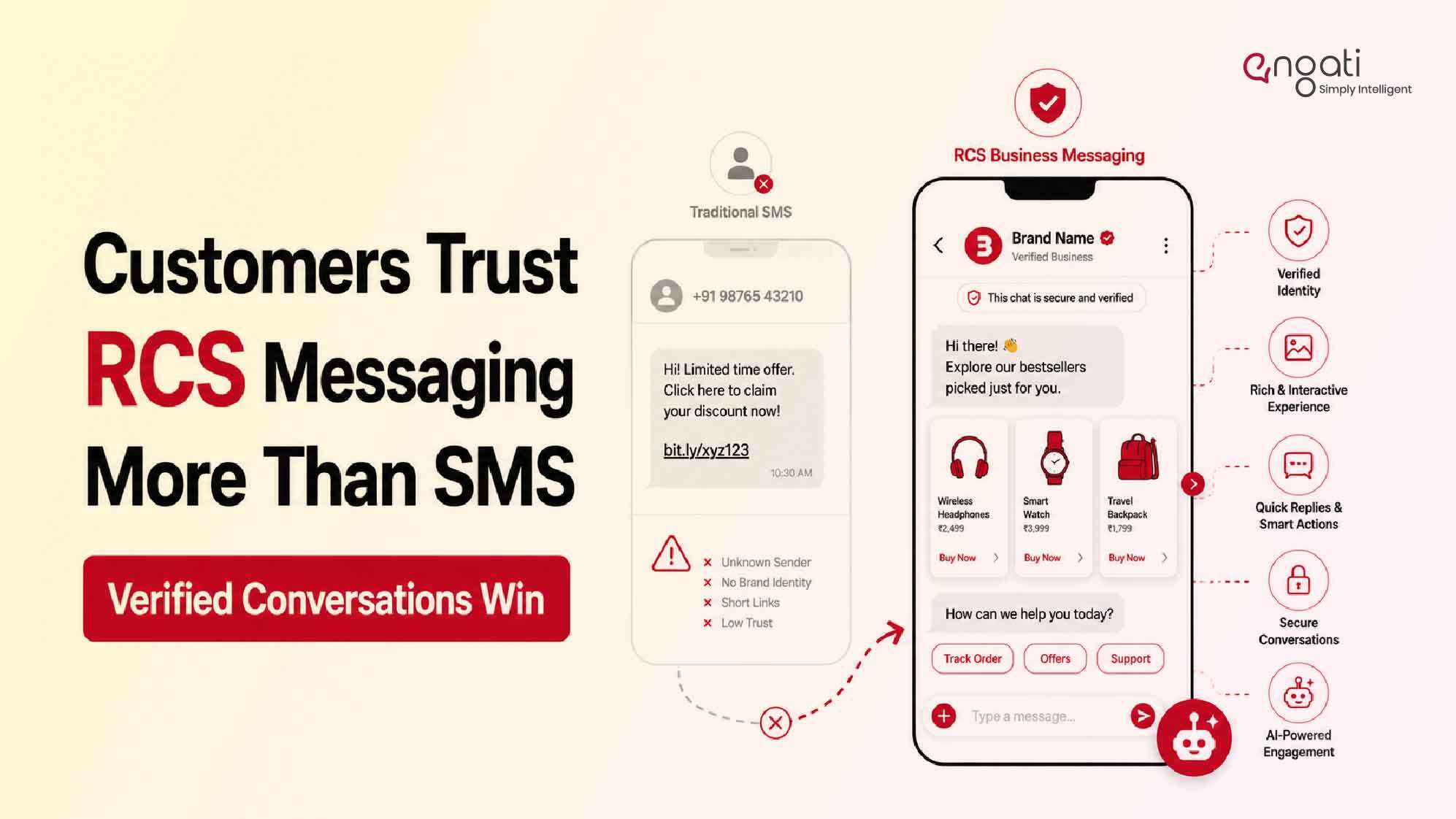
Unlike traditional SMS, RCS creates a verified, branded, and interactive messaging experience that feels significantly more credible from the very first interaction. And honestly, trust is becoming one of the biggest differentiators in customer engagement today.
The first thing users notice with RCS is identity.
Instead of receiving a plain text message from a random number, customers see a verified business profile with the company name, logo, brand colors, and official verification. That small visual difference changes perception immediately.
The conversation feels legitimate.
And in industries like banking, healthcare, retail, travel, or eCommerce - where users are constantly cautious about fraud and fake communication - that credibility matters a lot.
Traditional SMS was never really designed for trust-building. It was designed for delivery.
RCS changes that by making business communication feel more transparent and recognizable.
But the impact goes beyond branding alone.
One of the biggest reasons customers disengage from SMS campaigns is that the experience feels static. Businesses send a message, attach a link, and hope the user continues the journey elsewhere.
RCS makes the interaction far more intuitive.
Businesses can now create rich conversational experiences directly inside the messaging thread using:
- Rich images and videos
- Product carousels
- Quick reply buttons
- Suggested actions
- Interactive booking flows
- Real-time conversational journeys
Instead of forcing customers to leave the conversation, brands can guide them contextually within the interaction itself.
And that naturally creates more confidence because users feel in control of the experience.
What makes this even more powerful is when RCS is combined with conversational AI platforms like Engati.
At that point, messaging stops feeling transactional and starts feeling genuinely interactive.
For example, if a customer receives a retail campaign through traditional SMS, the experience is usually limited to:
“Click here to shop.”
With conversational RCS, the customer can:
- Browse products inside chat
- Ask questions
- Receive recommendations
- Compare options
- Complete actions conversationally
The interaction becomes significantly more natural because it mirrors how users already communicate digitally.
And importantly, it reduces uncertainty.
One underrated problem with traditional SMS journeys is that users are constantly redirected across unfamiliar links and disconnected pages. Every additional step introduces hesitation.
RCS reduces that friction by keeping interactions inside a secure, branded environment.
This is especially important in industries where trust directly affects conversions.
In healthcare, patients are more likely to engage when appointment confirmations come from verified hospital profiles instead of generic numbers.
In BFSI, customers are significantly more comfortable interacting with secure branded messaging rather than random transactional texts.
In hospitality and travel, branded conversational updates create a more premium customer experience compared to fragmented SMS notifications.
Even for customer support, the difference becomes noticeable. Traditional SMS conversations usually feel one-sided and limited. RCS enables businesses to create responsive support experiences where users can interact dynamically instead of simply receiving notifications.
And honestly, this shift is happening at the right time.
Customers today are becoming more selective about which brands they engage with digitally. Attention is limited, skepticism is high, and trust has become harder to earn.
Businesses can no longer rely purely on visibility.
They need credibility.
That is why RCS Business Messaging is becoming much more than a messaging upgrade. It is becoming a trust infrastructure layer for digital customer engagement.
With conversational engagement powered by Engati, businesses can combine verified identity, rich interactions, secure communication, and AI-driven personalization into a single conversational experience. To explore book a Demo.